
Autonomous driving technologies are advancing at an unprecedented pace. The field is experiencing a gradual but fundamental shift from strictly rule-based, modular pipelines—traditionally separating perception, prediction, planning, and control—toward learning-centric architectures in which these functional boundaries are increasingly softened rather than fully eliminated. In this emerging landscape, data-driven representations such as neural world models, Mixture-of-Experts (MoE) architectures, and large-scale vision–language models (VLMs) are being integrated into end-to-end or near end-to-end driving stacks to enhance semantic scene understanding, temporal reasoning, and decision-making under uncertainty. While these approaches substantially expand the capability envelope of autonomous systems, they also introduce new challenges in system integration, formal verification, runtime efficiency, and performance predictability, particularly in safety-critical and real-time settings.
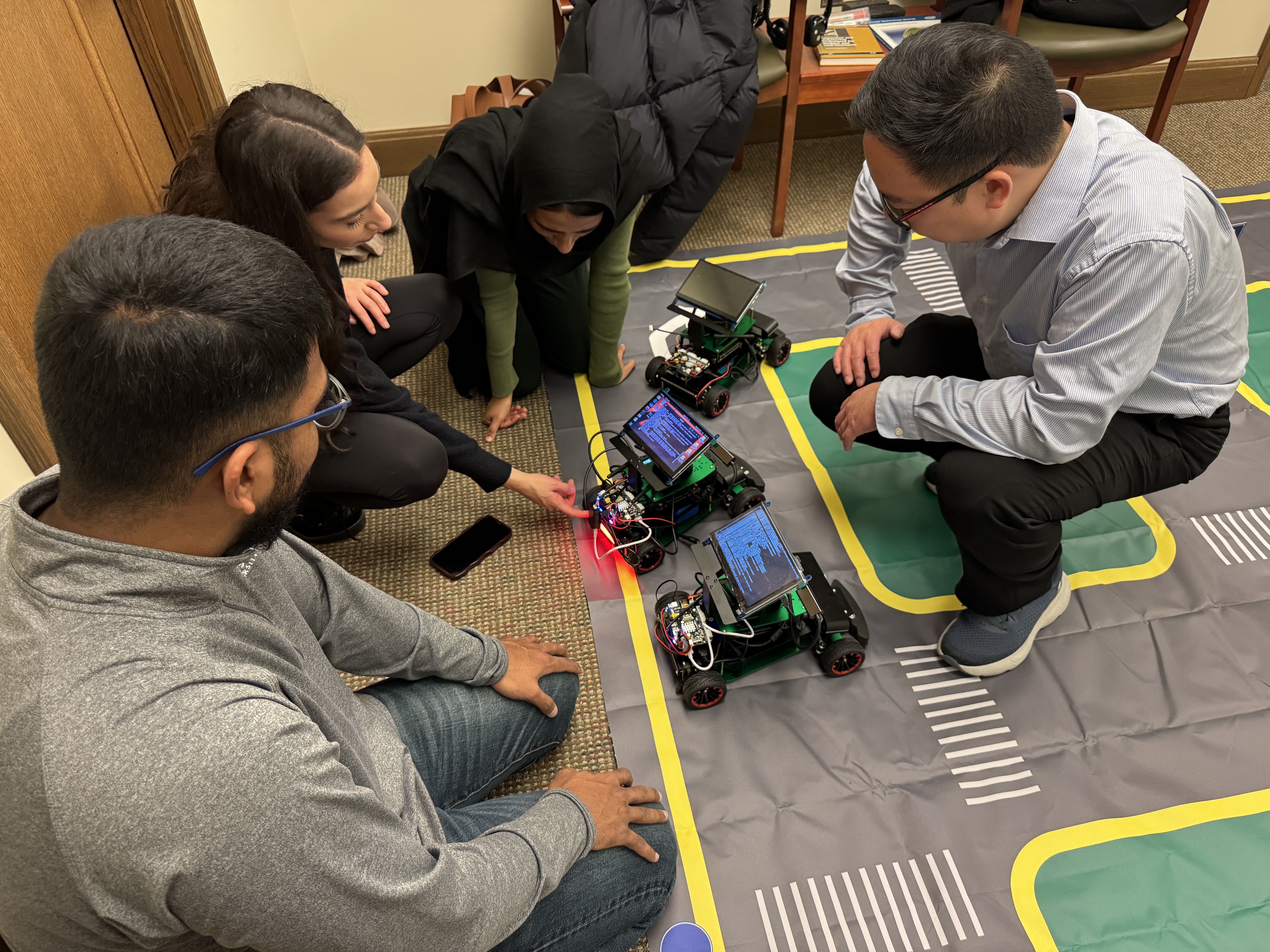
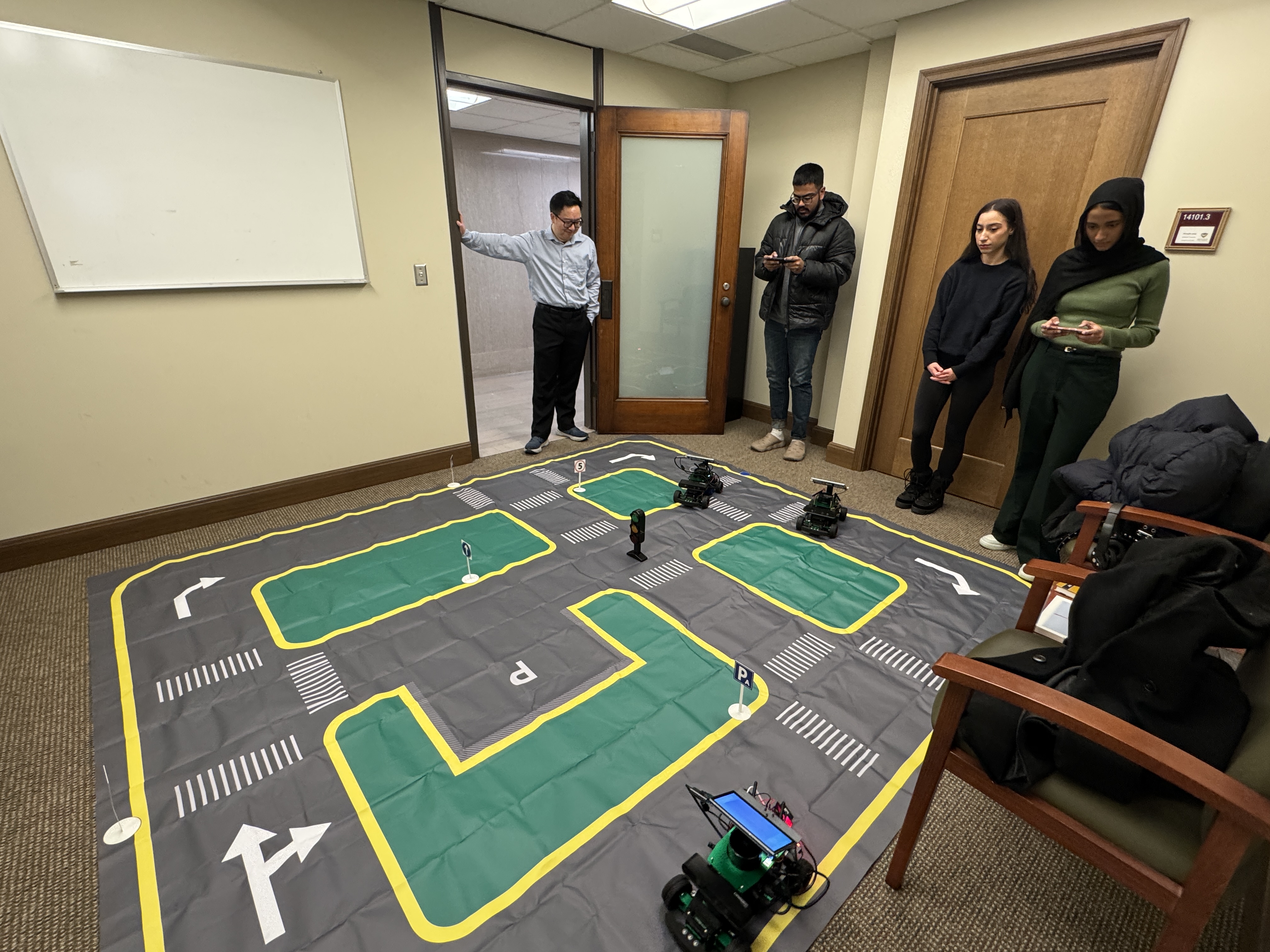
To keep pace with this rapidly evolving landscape, it is essential to engage the talent pipeline early and provide students with meaningful exposure to the fundamentals of autonomous systems. At Wayne State University, we have developed a series of undergraduate research projects designed to introduce students to “starter-level” yet impactful research topics in autonomous mobility. These projects span a broad set of foundational activities, including integrating hardware components into autonomous vehicle testbeds, developing perception pipelines, implementing path-planning algorithms, exploring actuation mechanisms, and experimenting with emerging end-to-end learning-based models.
Through hands-on experience, mentorship, and guided experimentation, these projects not only help students build essential technical skills but also spark early interest in mobility research. Our goal is to inspire undergraduate students to pursue advanced studies or future careers in autonomous driving, robotics, and next-generation intelligent transportation systems.
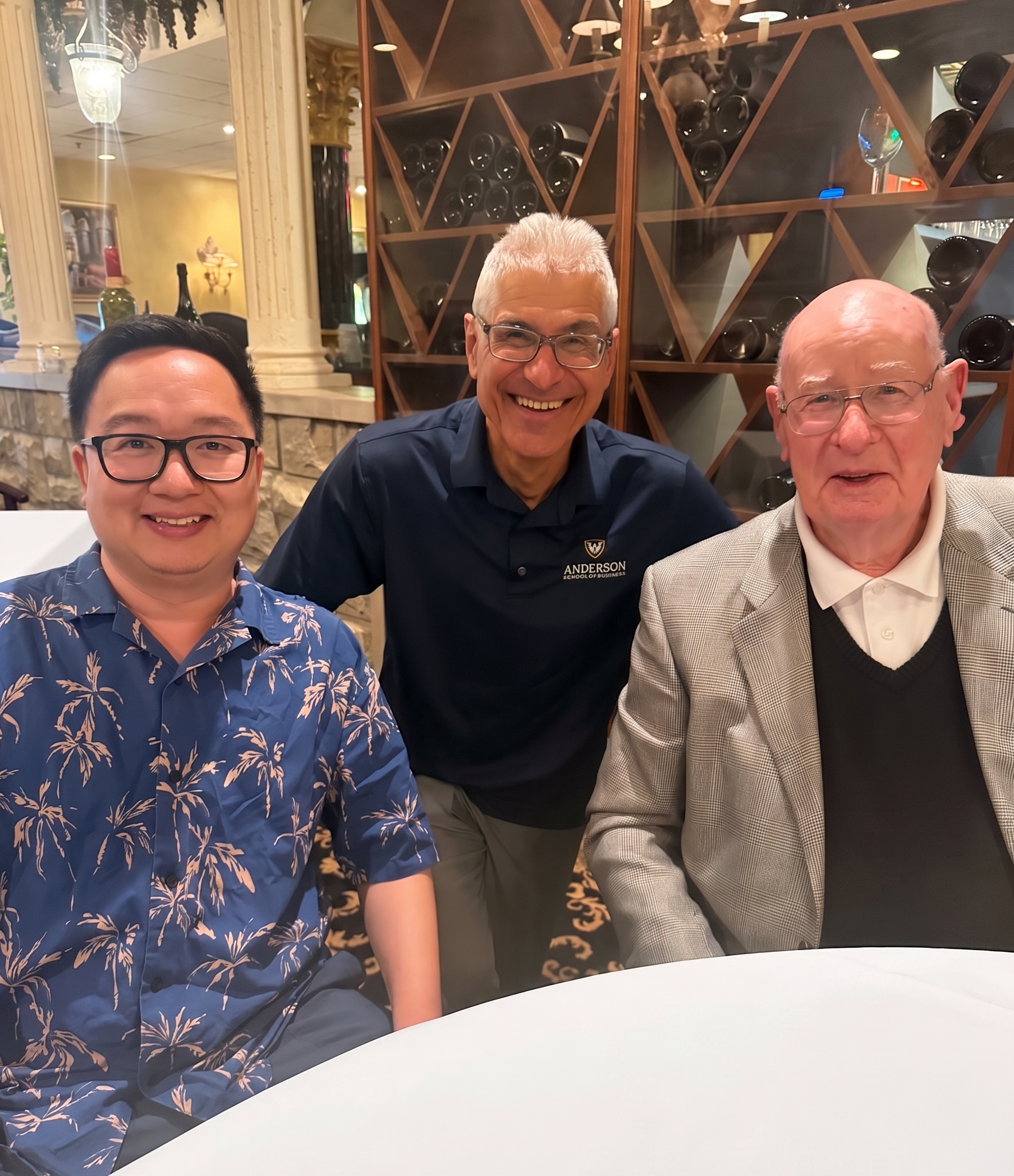
We gratefully acknowledge the support provided by the Randal Murphy Endowed Mobility Undergraduate Research Fund at the James and Patricia Anderson College of Engineering.
Last modified 25 November 2025